Making Pet Portrait Pots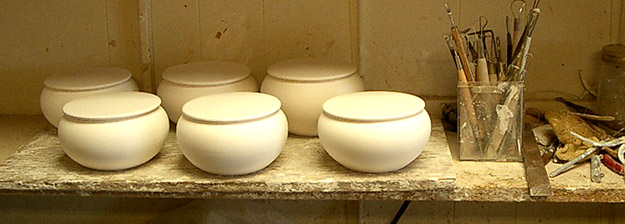
A group of digital photos (jpgs) or regular photographs of the subject (usually 4 to 6) are used to create the pet's likeness. A pot can be made from a single favorite shot but a choice among several shots is preferred and usually allows a better sense of the pet's personality to shine through. The better the quality of the photos, the more detail can be included, though a good pot can come from a less than sharp photo. Professional photographs can be used as the basis of the portrait ONLY if you get permission from the photographer to use the photo. Once the photos have arrived, the next step is figuring out the design. What best represents the pet? What will look interesting? How much of the pet to include? This can be anything from just the head to the whole animal! What best fits into the circle format? Some portraits are a combination of photos, others taken from one single shot. What sort of border and what colors will look best? 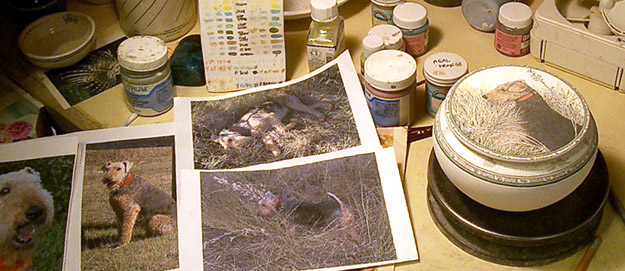
After drawing the image on the lid with a pencil, it's time to paint. Working with underglazes can be a trying experience. Unlike other painting mediums, what you see is often not what you get; by the time the pot is fired, it's too late to make corrections. Some colors look quite a lot like they do when they come out of the kiln, others it's a bit of a guessing game. Some colors are difficult to match. The biggest problem is that a color can look like it's been applied evenly and with the correct thickness while it's actually uneven and thin. No matter how careful one is, there are always surprises when a pot emerges from the kiln. Here is an example of a pot on it's way into the kiln and how it came out: 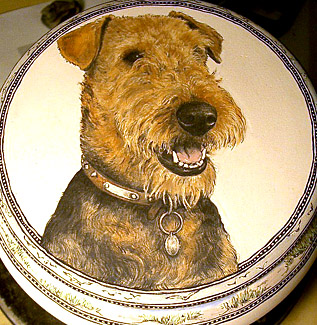
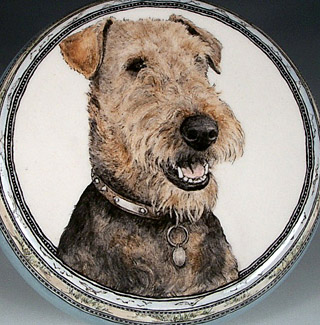
Despite the occasional problem, the virtue of working in clay is that when a pot is fired in the kiln, it is forever. Think of the earliest artifacts of mankind - pottery shards! The pots may be broken but they're still around! With a little careful handling, your pet's image will be here for the rest of history. For inquiries or to order a pot, click here.Return to the Pet Portrait Home page. |